|







"My music
sounds great!
Thanks for doing such a good job!"
|
|
Music

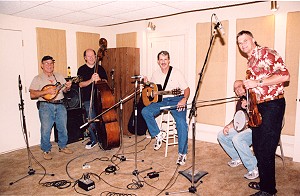 For
musicians, vocalists and songwriters, professional audio production can
make the vital difference between winning and losing in a highly competitive marketplace. With that said,
consider what you want to record - and what you'll use the recording for: For
musicians, vocalists and songwriters, professional audio production can
make the vital difference between winning and losing in a highly competitive marketplace. With that said,
consider what you want to record - and what you'll use the recording for:
Entertaining Friends and Family
To demonstrate your artistic skills to those who already know you, a professionally produced CD with your photo on the cover makes a great gift.
Getting Booked
If you want to perform your music for live audiences, a demo CD or flash drive will help
you get booked. Three, four or five songs should be enough to allow
someone to make a booking decision in your favor. If you play music that's
already well known, most of the tunes on your demo should be up-tempo with
the best-known song first.
Getting Signed
If you write original music and want either a recording or publishing
contract, a demo will enable you to present your work effectively
to the necessary contacts. Once again, put your strongest material up
front.
Getting Rich
As long as you're in the studio anyway, consider recording an entire
album. There are two very good reasons to do this.
1. Independently produced music generates more than $50 million per year in sales.
With a little effort, you can have your share.
2. If you prefer the traditional approach, a record company representative
receiving your album, rather than just a demo, will know immediately that
you're serious enough about your music to have already made a substantial
commitment. The more you demonstrate your faith in yourself, the more
likely someone will share that faith by investing in you and your
creativity.
Included with Your Recording Session
 |
A production technician with many years of experience
as a professional guitarist, singer and songwriter - and 50 years in
professional audio. |
|
|
If desired, competent coaching can be provided in
guitar, voice and musical arrangement technique.
|
|
|
An 8-track digital recording system combining
Macintosh, Mackie and ProTools, expandable to 24 tracks. Many musicians
play more than one instrument, so a trio can sound like several more players.
Multiple tracks also permit making revisions at a later time
without disturbing anything already recorded. |
Fees
$50.00 per hour,
one-hour minimum
After the first hour,
sessions are billed by the quarter-hour.
Terms
Cash or check
Fine Points
|
|
For vocalists who don't play an instrument and
have no access to musicians, several companies provide pre-recorded
music tracks for an amazing variety of songs. www.pocketsongs.com is just
one; there are many others. |
|
|
Ask about neatly designed and printed CD labels,
covers and tray inserts. The better your CD looks, the more likely
someone will actually listen to it - or buy it. |
|
|
IMPORTANT! Before anyone else can do anything for you and your
music, you must do something for yourself. If you don't make a concerted
effort at building your career in music, you'll live out the rest of your life wondering what might have happened if you had.
|
How to Prepare for Your
Recording Session
For an enjoyable and productive session,
follow these hints:
-
Decide in advance exactly what you will sing or play.
-
Determine the final order for your tunes, then rehearse them in
that sequence until you can perform them in your sleep. For a
guitarist using a capo, grouping same-key songs together makes it
easier to keep in tune.
-
If you'll be using music charts or lyric sheets, bring extra
copies to the studio for the production technician. He may
hear an error that you miss. It's faster and more economical to
record another take immediately.
-
On the day before your session, check your instrument(s) for
the condition of guitar
strings and cords, amplifiers, rosin, valve oil, reeds, power
supplies for keyboards,
extension cords, etc.
-
On the night before your session - sleep! Although there is a
certain "show biz" mystique about working long hours without rest,
your performance will suffer as a result of fatigue.
-
On the day of your session, arrive early to become comfortably
acclimated to the studio environment.
-
Listen to all playbacks and direct all mixing and editing.
|
|